Droven.io AI Automation Tools: A Practical Guide to Intelligent Workflow Automation for US Businesses

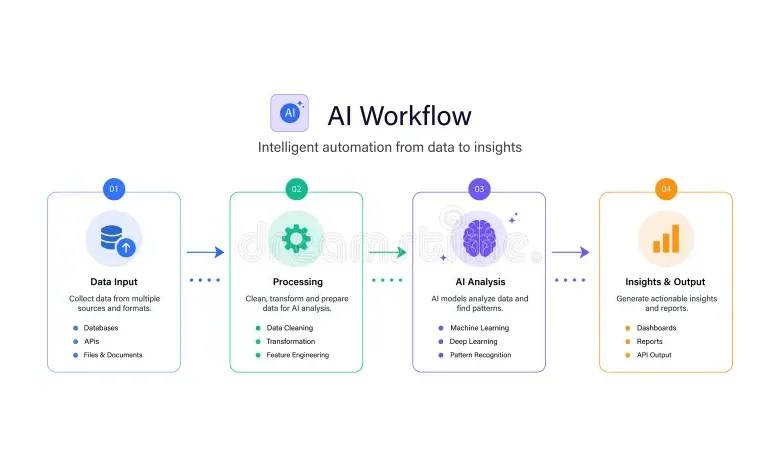
American companies are under pressure. Labor costs continue climbing, customer expectations for instant responses keep rising, and competitors are moving faster than ever. In this environment, intelligent automation is no longer a nice-to-have — it’s becoming a core operational capability.
Platforms like Droven.io have emerged as valuable editorial resources, cutting through vendor hype to explain how AI automation tools actually work, where they deliver value, and what realistic implementation looks like. This guide draws on current data and platform insights to give US business leaders a clear, balanced view of the landscape in 2026.
Key Takeaways
- Droven.io AI Automation Tools represent a maturing category of intelligent workflow platforms that can deliver real efficiency gains when matched to the right processes.
- Leading options (Zapier, Make, n8n, Power Automate, UiPath) each have distinct strengths; the best choice depends on your existing technology stack, data sensitivity needs, and team skills.
- Benefits are well-documented in productivity, cost, and speed — but only when implementation includes proper scoping, data preparation, and change management.
- Challenges around integration, governance, and maintenance are real and should be planned for from the start.
- The most sustainable advantage comes from combining technology with clear strategy and ongoing human oversight.
US businesses that approach AI automation with curiosity and discipline using trusted editorial resources to stay informed are positioning themselves to operate more efficiently while preserving the human judgment that customers still value.
What “Droven.io AI Automation Tools” Actually Means
Droven.io AI Automation Tools refers to the growing category of platforms and approaches that combine artificial intelligence with workflow automation. Unlike traditional scripting or basic RPA (robotic process automation), these systems can understand context, handle unstructured data, make recommendations, and adapt to exceptions with minimal human intervention.
Key capabilities include:
- Connecting disparate apps and data sources without heavy custom coding
- Using AI to extract information from documents, emails, or support tickets
- Triggering multi-step processes based on conditions or natural language instructions
- Learning from patterns to improve over time
The goal is not to replace people but to remove repetitive, error-prone work so teams can focus on judgment, creativity, and customer relationships.

How These Tools Differ from Earlier Automation
Traditional automation followed rigid “if-this-then-that” rules. Modern AI-powered versions add layers of intelligence:
- Natural language interfaces — Describe what you want in plain English (e.g., “When a new lead comes in from our form, qualify it using our criteria and create a task in our CRM”)
- Document understanding — Extract data from invoices, contracts, or forms even when layouts vary
- Agentic behavior — Some systems can plan and execute multi-step tasks across multiple tools with human oversight checkpoints
- Continuous improvement — Performance data feeds back into the system to refine future runs
This evolution explains why adoption has accelerated so sharply. According to recent analyses, 88% of enterprises now use AI automation in at least one business function, up dramatically from just a few years ago.
Leading Platforms in 2026
No single tool wins for every use case. Here are the platforms most frequently discussed in balanced evaluations:
Zapier remains the most accessible entry point for many US small and mid-sized businesses. It offers thousands of app integrations and increasingly sophisticated AI actions. Strengths include speed of setup and a huge ecosystem. Limitations appear at very high volume or when highly custom logic is required.
Make (formerly Integromat) excels at complex, visual workflows with strong data manipulation and branching capabilities. It often appeals to operations teams that need more power than Zapier provides without moving to developer-heavy solutions.
n8n stands out for organizations prioritizing data privacy and control. Because it can be self-hosted, it reduces concerns about sending sensitive customer or financial information through third-party clouds — an important consideration under US privacy expectations and sector regulations.
Microsoft Power Automate integrates deeply with Microsoft 365, Dynamics, and Azure services. Its AI Builder capabilities for document processing and the Copilot interface for building flows in natural language make it particularly strong inside organizations already invested in the Microsoft ecosystem.
UiPath continues to lead in scenarios involving legacy systems or desktop applications without modern APIs. Its combination of robotic process automation with AI computer vision and document understanding remains valuable for finance, healthcare, and manufacturing workflows common across the US.
Emerging agentic platforms — where AI agents handle end-to-end processes — are gaining attention but still require careful scoping and human governance.
Measurable Benefits US Companies Are Seeing
Organizations that implement thoughtfully report meaningful gains:
- Productivity improvements in the 20–40% range on targeted processes are common once systems stabilize.
- Cost reductions come from both lower manual effort and fewer errors (rework is expensive).
- Faster cycle times improve customer experience — order confirmations, support responses, and onboarding happen in minutes instead of hours or days.
- Employees often report higher job satisfaction when routine tasks are automated, allowing them to focus on higher-value work.
Industry data suggests companies realizing strong returns see average ROI multiples in the range of 5x or more within the first 12–18 months when projects are well-scoped.
These outcomes are not automatic. They depend on starting with clean data, choosing the right processes, and maintaining the automations as business rules change.
Challenges and Realistic Limitations
Balanced reporting requires acknowledging where things go wrong. Many organizations still struggle with:
- Data quality and integration — AI performs best when underlying systems are reasonably clean and connected. Legacy data silos remain a major friction point.
- Change management — Employees need training and reassurance that automation augments rather than threatens their roles. Poor communication leads to low adoption.
- Over-automation — Automating the wrong processes or removing necessary human judgment creates new problems downstream.
- Ongoing maintenance — Workflows break when apps update or business rules change. Budgeting for governance is essential.
- Security and compliance — Moving data between systems raises legitimate questions about access controls, audit trails, and regulatory alignment (especially in finance, healthcare, and any business handling personal information).
Reports indicate that a significant percentage of AI initiatives are paused or scaled back when these issues surface early. Success correlates strongly with starting small, measuring rigorously, and treating automation as an ongoing program rather than a one-time project.
How to Get Started Effectively in 2026
A practical path for most US organizations looks like this:
- Process audit — Map repetitive, high-volume tasks that involve data movement between systems or document handling. Prioritize those with clear rules and measurable volume.
- Start narrow — Pick one or two processes for a pilot. Success here builds organizational confidence and reveals integration quirks.
- Choose the platform based on your stack — Microsoft-heavy environments usually begin with Power Automate. Teams wanting maximum flexibility and lower long-term costs often evaluate n8n or Make. Zapier works well for quick wins across many cloud apps.
- Build governance early — Define who can create and modify automations, how changes are tested, and what success metrics matter.
- Measure and iterate — Track time saved, error reduction, cycle time improvement, and employee feedback. Use the data to expand or refine.
- Invest in people — Training and clear communication about how roles evolve are as important as the technology itself.
Resources like Droven.io are particularly useful during the research and planning stages because they provide context without pushing specific vendors.
The Road Ahead: Agentic Workflows and Human-AI Collaboration
Looking forward, the biggest shift is toward more autonomous “agentic” systems that can handle multi-step objectives with less step-by-step configuration. These are not replacing human decision-makers; they are surfacing options and executing routine paths while escalating exceptions.
The organizations that will benefit most are those that treat automation as a capability to be developed thoughtfully rather than a product to be purchased. Focus remains on clear use cases, clean data foundations, appropriate human oversight, and continuous measurement.
FAQ
What are Droven.io AI Automation Tools?
They refer to the intelligent automation platforms and approaches covered in resources like Droven.io — tools that use AI to connect apps, process documents, handle workflows, and reduce manual repetitive work across business functions.
Which platform is best for small US businesses?
Many small teams start successfully with Zapier because of its ease of use and broad integrations. As needs grow more complex, Make or n8n often become attractive alternatives.
How much do these tools cost?
Pricing varies widely. Entry-level plans for Zapier or Power Automate can start under $20–30 per month for light use, while enterprise deployments with high volume or advanced AI features scale into hundreds or thousands per month. Most vendors offer usage-based or tiered pricing.
Are these tools secure enough for sensitive customer or financial data?
Security depends on configuration and the specific platform. Self-hostable options like n8n give more control. All major platforms offer encryption, access controls, and compliance features, but businesses must still implement proper policies and review vendor SOC 2 or similar reports.
What’s the difference between traditional RPA and modern AI automation?
Traditional RPA mimics mouse clicks and keystrokes on existing interfaces. Modern AI versions add understanding of content (via NLP and computer vision), decision-making capabilities, and the ability to adapt when data or layouts change slightly.
How quickly can a company expect to see ROI?
Well-scoped pilots often show measurable time savings within weeks. Broader ROI, including error reduction and process speed improvements, typically becomes clear within 3–6 months when projects are properly measured and supported.
